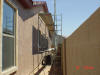
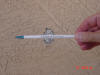
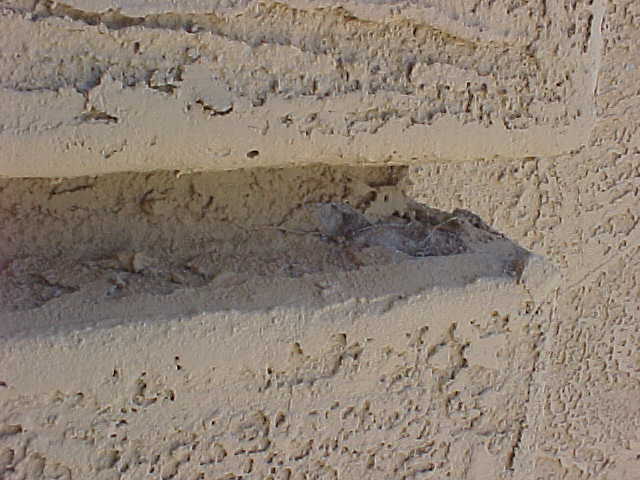
The during the home buyer's Professional Home Inspection of this New Home (only 45 days old) numerous Builder Defects were discovered, not the least was the defective stucco application. (THERE ARE SEVERAL AUDIO/VIDEO CLIPS TO VIEW BELOW. TO PLAY EACH VIDEO, CLICK THE LINK OF SO INDICATED OR MOVE YOUR MOUSE POINTER OVER THE IMAGE IF SO INDICATED)
When homes are built in the summer months, here in the Valley Of The Sun, predominantly between June and September, we see many homes, perhaps the majority of new construction, that exhibit deficiencies in stucco application. The stucco of this house is among some of the most inappropriately applied stucco systems that we have encountered.
The buyer instructed the builder to bring the stucco subcontractor to the property for a discussion of the defect. The stucco subcontractor agreed to have the walls of the house sprayed with water for several days, then check the stucco for proper cured conditions, then patch the holes and voids. This home inspection took place on July 23rd 2005, the Builder was notified of the stucco defect on July 24th 2005 This web page was written on August 5th 2005 and the buyer is still working through the process of getting their house finished to the standards set forth by the Registrar Of Contractors Standards Of Workmanship.
Some points of interest about stucco. The majority of homes constructed in the valley in the 80s, 90s and 2000s are constructed with a One-Coat Stucco System. Some of the stucco systems are a propriety mix formula, some of the stucco systems are purchased by the stucco subcontractor in pre-mixed bagged bulk, and some are purchased by the stucco subcontractor in bulk components that must be mixed on site. All of the stucco systems are applied in similar fashions and all stucco contractors are required to post a copy of a "Stucco Application Card" with the builder and with the governing municipality building office.
And... no... as you will see below... in the video clips... stucco is not suppose to flex. The ASTM standard calls for a maximum deflection of L/360 for the support members or sheathing. The deflection of the wall surface is often expressed in terms of distance between supports (L) and the typical value the material can deflect without damage. For plaster (stucco) it is in the range of 360-480. Thus for 16" OC (On Center) studs, 16/480=.033" or 16/360=.044".
In general, the issues depicted below look to be poor curing. We have sold many residential homes in AZ that have stucco, and the issue is always maintaining the environment. Too hot and too dry , with winds, causes the materials to dehydrate, and you are left with the powder you see in the video clips below. Typically this is also associated with a lot of cracking.
Bottom line... once again... this is a graphic example of some of the items that can go wrong when a new home is under construction and even after the construction process has been completed.
Phase Inspections are ESSENTIAL if you wish to protect your investment. Who is going to look out for your interests and perhaps the most important investment of your life?
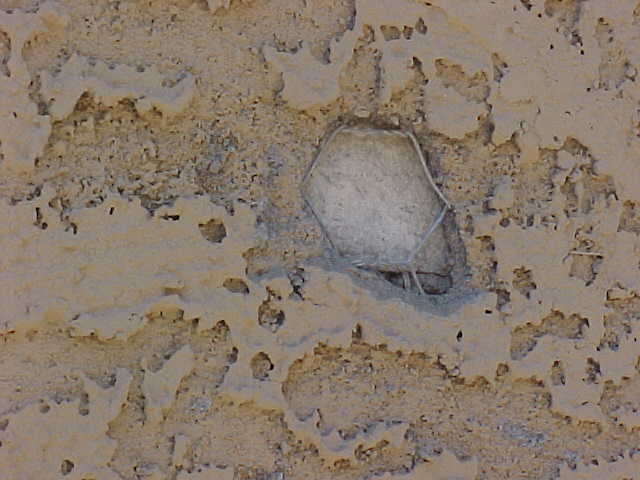
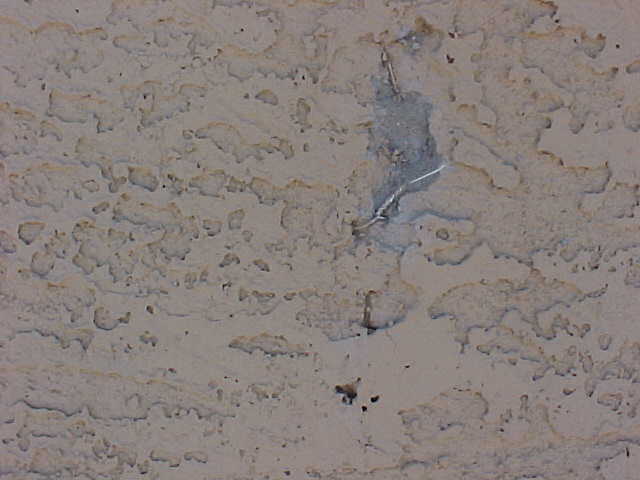
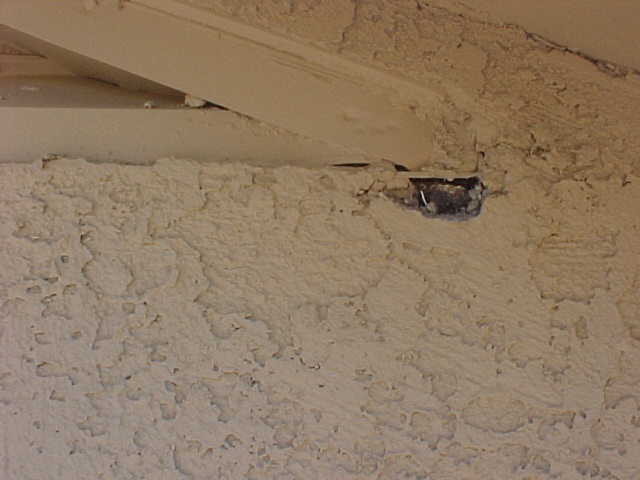
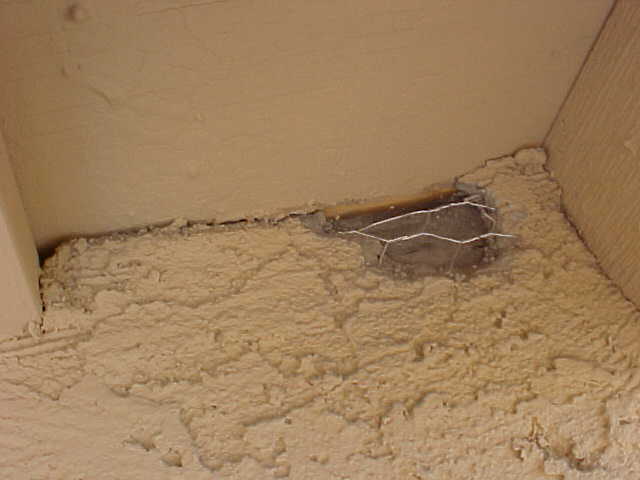
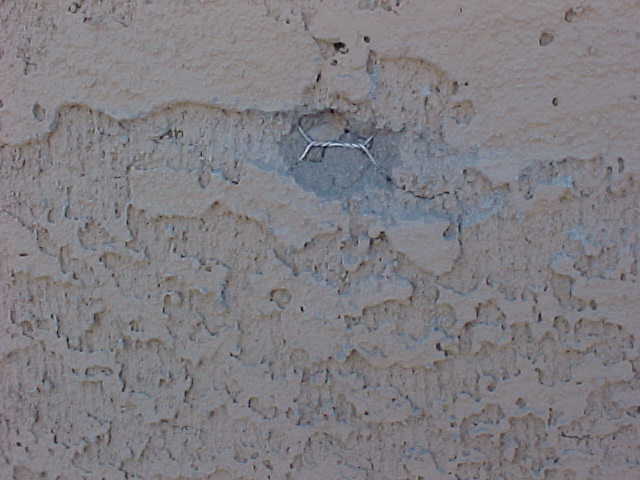
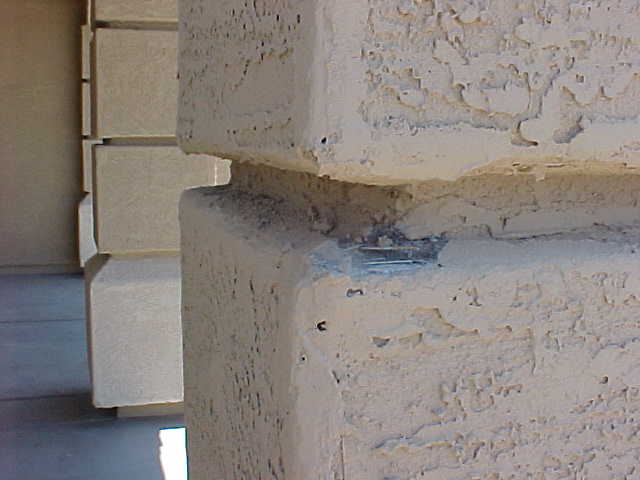
Enlarge
This movie may take 2 to 4 minutes to BUFFER
Please be patient This is Worth Waiting For :-)
Enlarge

More Stucco Terror
Below are to different homes, built by two different builders, than the builder that built the home in the above video. (THERE ARE SEVERAL AUDIO/VIDEO CLIPS TO VIEW BELOW. TO PLAY EACH VIDEO, CLICK THE LINK OF SO INDICATED OR MOVE YOUR MOUSE POINTER OVER THE IMAGE IF SO INDICATED)
In both of the examples below, the stucco application process was not followed resulting in inferior stucco finish.
In the example on the right below, the stucco had to be removed from the home because that builder the paint coat so thick that the stucco could not be hydrated through the coats of paint that was about 1/32 of an inch thick. The stucco on this house deflected over 1/2 of an inch, 15 times greater that is allowed by specification.
In the example on the left below, this home was still at the pre-paint stage. The stucco is about 5 days old on this house and... as you will see, the stucco has been applied too thin and has not begun the curing process.
Once again... this is a graphic example of some of the items that can go wrong when a new home is under construction and even after the construction process has been completed.
Phase Inspections are ESSENTIAL if you wish to protect your investment. Who is going to look out for your interests and perhaps the most important investment of your life?