the builder blow up your new home?
You have a right to hire an independent home inspector
and he/she has a right to enter the property, just as the appraiser does.
Read
This if you have any doubts.
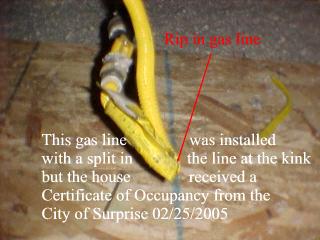
In this scenario, the home inspector did enter the attic, contrary to the builders' instructions and... what to ya know... he found that the gas line that feeds the heater had been installed with a small tear in the gas line. The potential for an explosion is obvious, but keep in mind, if the home inspector had subscribed to the instructions mandated by the builder, there could well have been a very unfortunate end result. Today's gas appliances do not ignite from pilot lights, today's gas appliances are ignited by an electrical spark from an igniter. If the gas had been activated and the electric igniter sparked... well... let's just say... there could have been one less home in Surprise and who knows how many fewer citizens.
The home buyer hired an independent home inspection company to inspect his new home before he closed on the property. The builder made it very difficult for the home inspector to gain access to the property, first by insisting that that home inspector provide insurance coverage in excess of that required by Arizona's state requirements, then by insisting that the home inspector add the builder to the home inspectors insurance policy as an 'Additional Insured' entity.
The builder issues specific mandates upon the home inspector, insisting that the home inspector NOT enter the attic, NOT open the electrical panel main face, NOT climb on the roof.
Regarding the roof, many home inspectors do not walk on new roofs because many builders will not forward the roof warranty to the buyer, alleging that the buyer's home inspector may have broken some roof tiles. Therefore, most home inspectors will use a telephoto lens on their camera and binoculars to examine the roof fields, ridges and valleys.
Regarding the electrical panel. This is quite a different situation. Remember that home inspectors are certified by the state. As such, the home inspector has to pass a set of very strict and stringent criteria to obtain his/her state inspection certification. One of those parameters is aligned with the property methodology to deploy when examining electrical sub panels. Therefore, the builder... really has no grounds to withhold your right to examine this item, or for that matter, any other item on the property.
Regarding not entering the attic. The builder alleges that the home inspector is not allowed into the attic for 'builder liability' reasons. Again, state certified home inspectors carry, at a minimum $25,000 surety bond that would cover most damage that could be caused by an inspector falling through the ceiling.
Here's a really scary reality... This home had received a CO (Certificate of Occupancy) from the City of Surprise. When a CO is issued by the city, that is the green light to all of the utility companies that they have authority to activate their utility, electricity, water and gas. The CO is also affirmation to the home buyer that the property he/she is going to move into, and move their family into, is safe to occupy. As you can see, the home buyer should NEVER take anything for granted.
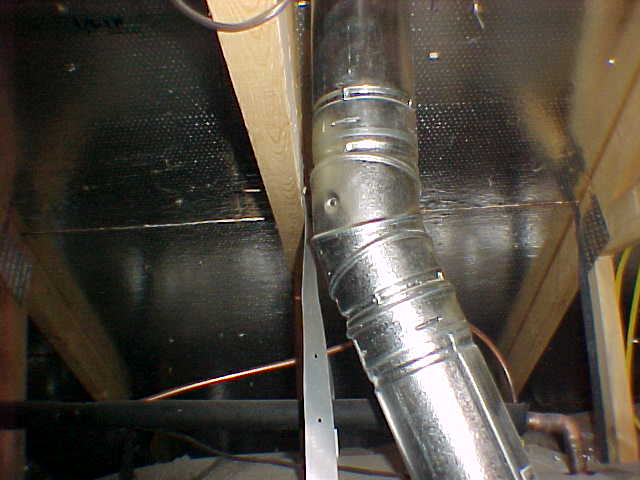
One more item to pay attention to. The Class B Gas Vent Pipe, that can reach temperatures upward over 500 degrees... is improperly assembled/installed. The minimum clearance for this type of Gas Vent Pipe is with a minimum of 1 inch between the metal pipe and any combustible material. You will see in the photo below... the Class B Gas Vent Pipe is all but resting on a two-by-four (2X4) roof truss member.
Phase Inspections are ESSENTIAL if you wish to protect your investment. Who is going to look out for your interests and perhaps the most important investment of your life.